For Appointment: +1 (201) 210-2315

For Appointment: +1 (201) 210-2315
Ramsay Hunt Syndrome (RHS) is a neurological condition caused by reactivation of the varicella-zoster virus affecting the facial nerve. It may present with facial paralysis, ear pain, dizziness, hearing changes, and difficulty with facial expression, speaking, eating, or eye closure.
Rehabilitation begins with an assessment of facial muscle strength, symmetry, movement quality, and functional limitations. Based on the person’s presentation and medical management, an individualized program can be developed to encourage facial nerve recovery while limiting inefficient or abnormal movement patterns.
Proprioceptive Neuromuscular Facilitation (PNF) uses specific movement patterns, manual cues, and gentle resistance to facilitate weakened facial muscles. Neuromuscular re-education may incorporate task-specific practice, mirror feedback, motor-control training, and repeated functional movements such as smiling, blinking, and speaking.

Individualized facial exercises and feedback may support symmetry, coordination, endurance, and functional expression while reducing compensatory movement and the risk of synkinesis. These interventions complement—not replace—appropriate medical care and may form part of broader neurological rehabilitation.
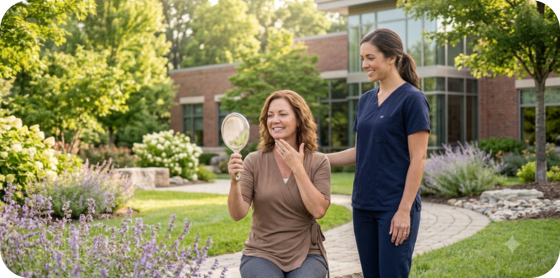
Physical therapy may support facial coordination, expression, communication, and daily function during recovery from Ramsay Hunt Syndrome. Progress varies, so rehabilitation should be individualized and coordinated with the patient’s medical team.


Beyond Radix Physical Therapy is dedicated to restoring mobility, reducing pain, and helping patients move confidently through personalized, evidence-based care delivered by experienced physical therapists.

Beyond Radix Physical Therapy – © . All rights reserved.
Beyond Radix Physical Therapy provides personalized, evidence-based rehabilitation services to help you move better, recover safely, and live pain-free. Our expert therapists focus on long-term results and compassionate care.
