For Appointment: +1 (201) 210-2315

For Appointment: +1 (201) 210-2315
Low back pain is one of the most common musculoskeletal conditions affecting people of all ages. It can result from poor posture, muscle strain, prolonged sitting, or underlying spinal conditions. Managing this pain often requires a combination of therapies to achieve long-term relief and functional improvement.
Cupping therapy is a traditional yet increasingly popular treatment used in modern physical therapy as a complementary approach. It involves placing suction cups on the skin to create negative pressure, which helps improve circulation, release muscle tension, and support the body’s natural healing process.
The suction created during cupping lifts the skin and underlying tissues, which increases blood flow to the affected area. This process helps reduce muscle tightness, improve mobility, and decrease pain sensitivity. It is often used alongside manual therapy, stretching, and strengthening exercises for better results.
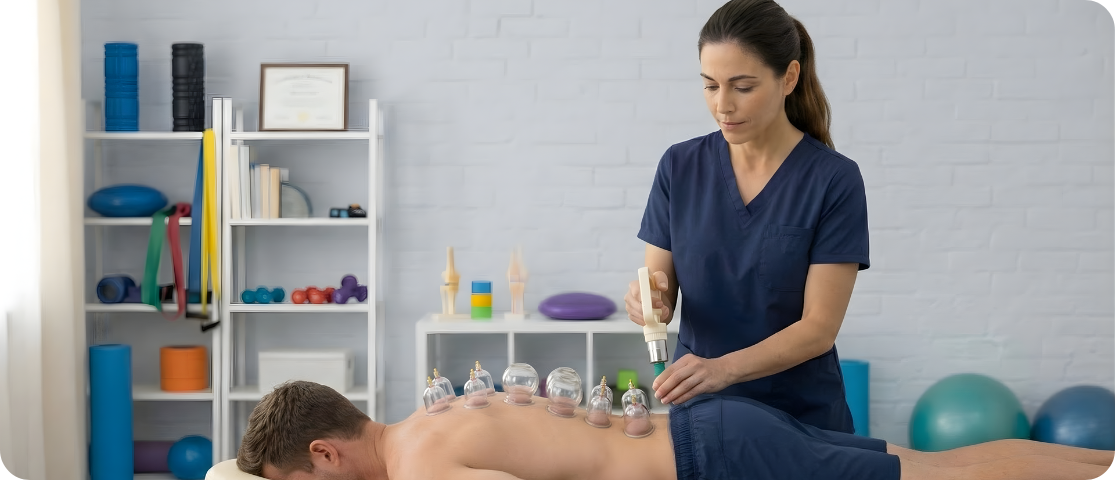
When integrated into a structured rehabilitation program, cupping therapy can provide noticeable improvements in pain relief and movement. It supports recovery by targeting both muscular and circulatory components of low back pain.

Cupping therapy is most effective when used as part of a comprehensive physical therapy program. By combining it with strengthening, posture correction, and movement training, patients can achieve better pain management, improved mobility, and long-term spinal health.


Beyond Radix Physical Therapy is dedicated to restoring mobility, reducing pain, and helping patients move confidently through personalized, evidence-based care delivered by experienced physical therapists.

Beyond Radix Physical Therapy – © . All rights reserved.
Beyond Radix Physical Therapy provides personalized, evidence-based rehabilitation services to help you move better, recover safely, and live pain-free. Our expert therapists focus on long-term results and compassionate care.
